
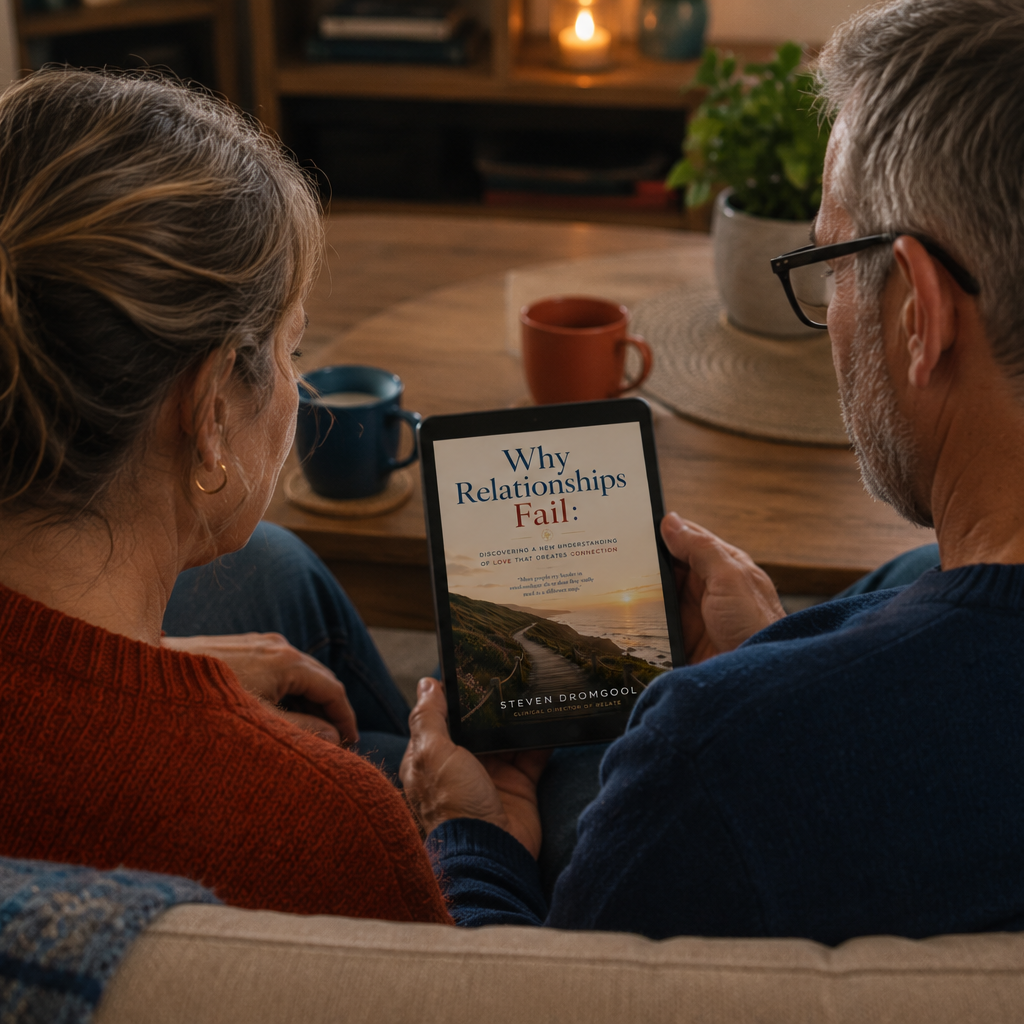




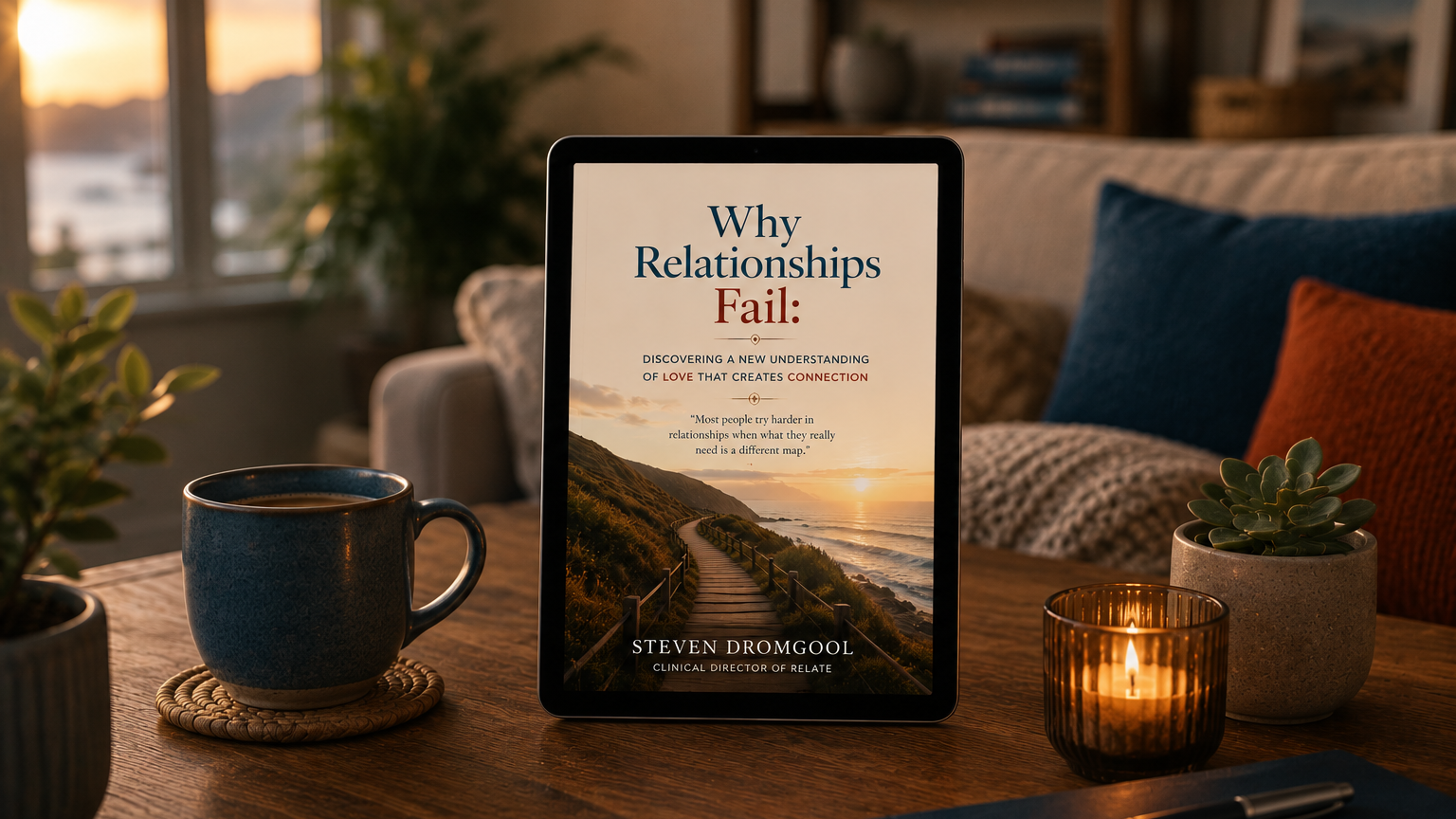
Why Relationships Fail
Maybe you're not broken. Maybe you need a different map.
- why painful patterns repeat
- why trying harder backfires
- why couples become exhausted
- what creates lasting connection
45-page digital guide - Read in about an hour
Why The Same Relationship Patterns Keep Repeating
Most couples do not start their relationship expecting emotional exhaustion.
- They do not expect the same arguments on repeat.
- They do not expect distance, resentment, shutdowns, loneliness, or the quiet fear that something important is slipping away.
Most people genuinely try. That is what makes relationship pain so confusing.
- You can care deeply about someone and still feel stuck.
- You can love each other and still hurt each other.
- You can want connection and still keep ending up in conflict.
And after enough painful cycles, many couples quietly begin asking themselves:
- Why does this keep happening?
- Why hasn’t anything worked?
- Are we broken?
- Is this just what relationships become?
If that is where you are right now, that's why 'Why Relationships Fail' was written.
- Not to shame you.
- Not to diagnose you.
- Not to pressure you.
But to offer a calmer possibility:
- Maybe you are not uniquely broken.
- Maybe you have simply been using the wrong map.
That idea sits at the centre of Why Relationships Fail; a short, practical relationship guide written by Steven Dromgool, Clinical Director of Relate.

Why Your Relationship Keeps Going In Circles
Most people were never properly taught how relationships work.
We pick things up from:
- our parents
- social media
- movies
- heartbreak
- survival habits
- mates giving advice over a drink
- and a whole lot of trial and error
Then we wonder why connection feels confusing.
Relationships bring up deep emotional territory
Hope.
Fear.
Insecurity.
Longing.
Shame.
Old wounds.
The fear of not being enough.
Which means most arguments are not really about dishes, money, parenting, or text messages.
They are usually about something underneath:
- “Do I matter to you?”
- “Can I trust you?”
- “Am I safe with you emotionally?”
- “Will you still choose me when things get hard?”
Couples often get trapped in repeating patterns
One person pushes harder.
The other shuts down.
One becomes critical.
The other becomes defensive.
One feels abandoned.
The other feels controlled.
And eventually both people feel misunderstood.
The painful part is that:
Most couples think the problem is the relationship itself.
But often the real issue is the pattern they are trapped inside. That is one of the key reframes inside Why Relationships Fail.
The guide helps readers stop asking: “Who is the problem?”
And start asking: “What pattern keeps happening between us?”
That shift changes the conversation completely. Because blame rarely creates connection. It takes something more.
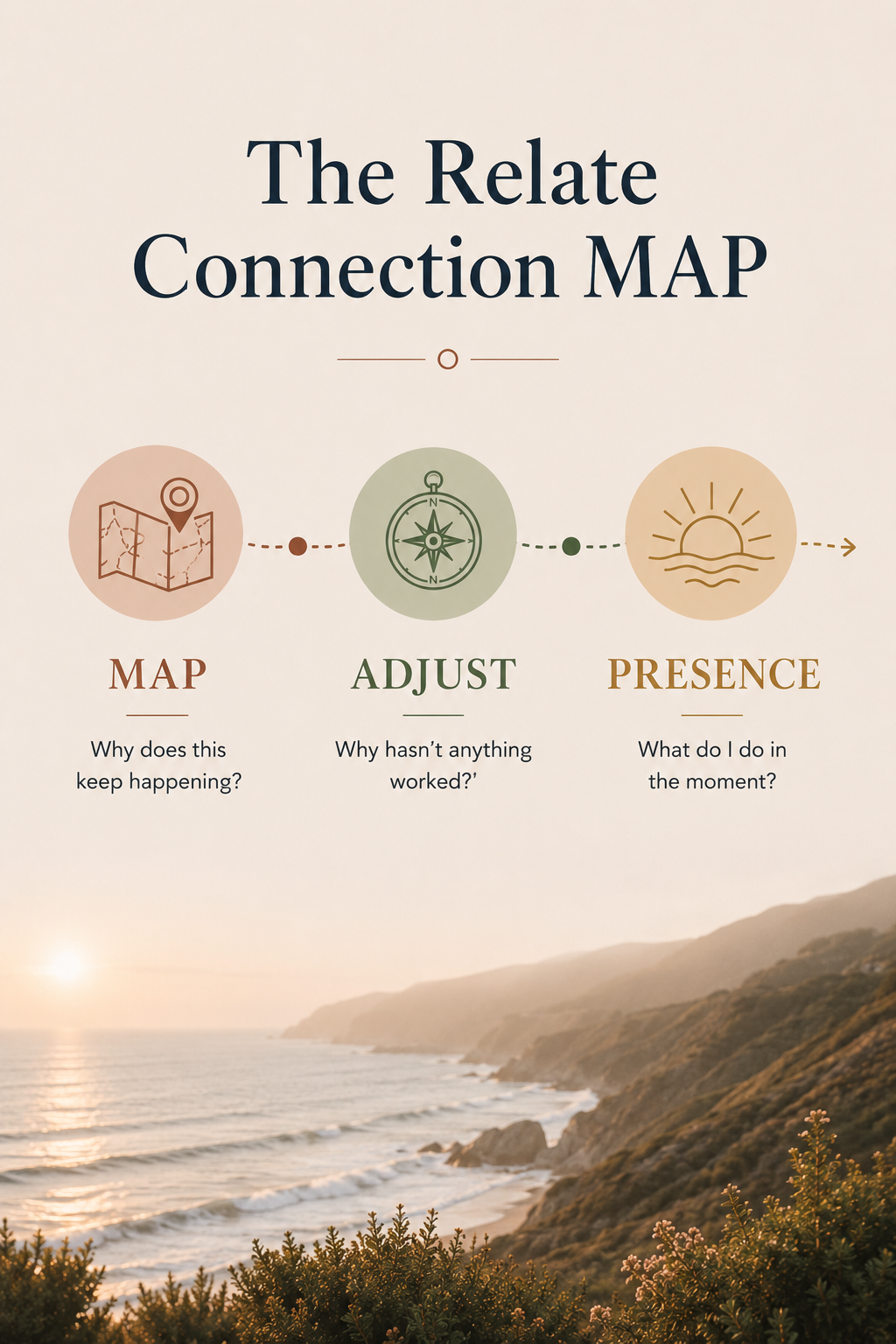
The Relationship Pattern Most Couples Never See
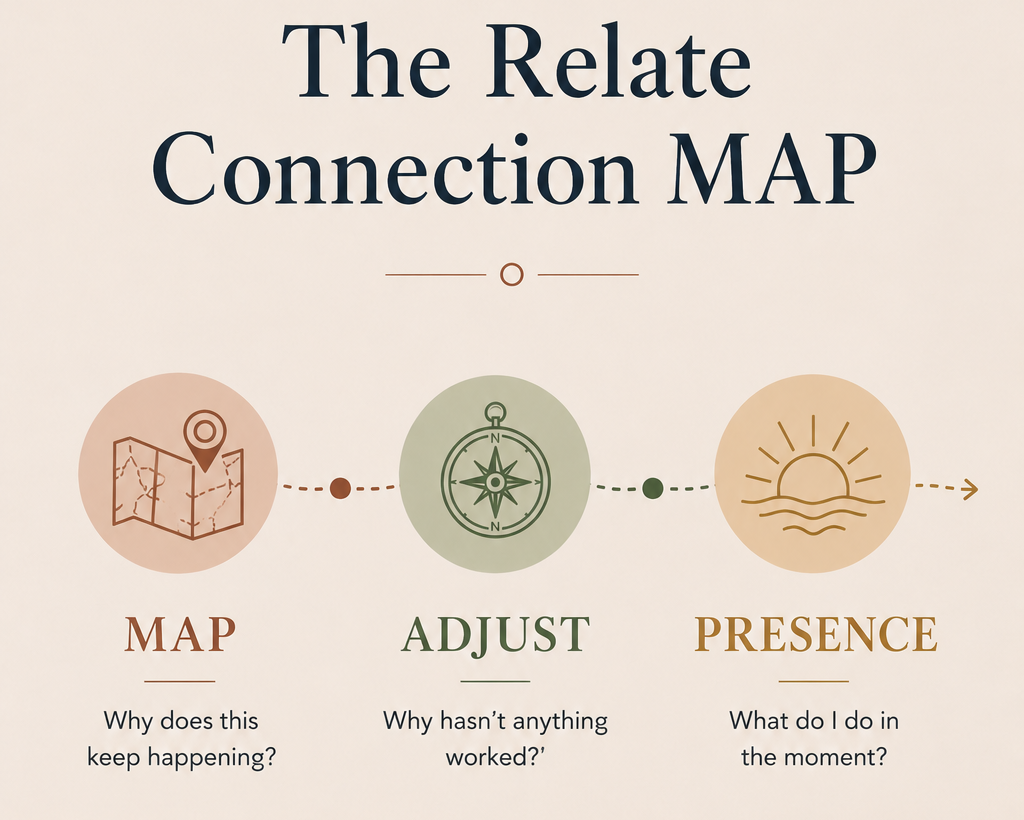
At Relate, we use a simple framework called the Relate Connection MAP.
Not because relationships are simple.
But because distressed people need clarity before they need complexity.
The MAP helps couples move through three stages:
MAP
Understanding the pattern.
This stage helps people recognise what keeps happening in the relationship.
Not who is winning.
Not who is worse.
The actual emotional cycle.
ADJUST
Challenging unhelpful beliefs.
This is where Why Relationships Fail sits.
The guide explores the hidden beliefs that quietly sabotage connection.
Beliefs like:
- “Relationships should always make me happy.”
- “If my partner changes, everything improves.”
- “Conflict means we’re incompatible.”
- “If I try harder, eventually they’ll get it.”
Many couples spend years trying to solve relationship pain with beliefs that accidentally make connection harder.
The guide helps people step back and see the bigger picture.
PRESENCE
Learning what creates connection in real life.
Once people understand the pattern, they can begin learning:
- emotional safety
- repair
- responsiveness
- emotional regulation
- healthier communication
- practical connection skills
That is where Relate’s deeper tools like 5 Secrets of Relationship Champions and professional counsellors become useful.
Because insight matters.
But lived behaviour matters too.

Why Most Relationship Advice Hasn’t Helped
Steven Dromgool did not write this guide from a place of perfection. He wrote it after his own marriage fell apart.
At the time, he was already a therapist. He knew resources existed. But like many couples, he had no clear way of knowing what would actually help.
So he and his partner tried different strategies:
- Trying harder
- Arguing
- Avoiding
- Bargaining
- Shutting down
- Hoping things would improve.
Nothing really changed.
Eventually they reached the heartbreaking point of separating and telling their children: "that Mum and Dad could no longer live together."
That experience started a much deeper journey into understanding relationships.
Over the next 20 years, Steven trained internationally, worked with more than 1,000 individuals and couples, and spent over 20,000 clinical hours helping people understand conflict, attachment, emotional safety, and connection.
But what makes the guide resonate is not just experience.
'Why Relationships Fail' Gives Reason for Hope
- The guide does not talk down to people
- It does not use shame
- It does not pretend relationships are easy
Instead, it offers something many distressed couples desperately need:
Relief.
The relief of realising:
- you are not the only couple struggling
- there are understandable reasons relationships become painful
- emotional patterns can be changed
- and healthy relationships are built, not magically stumbled into
That emotional shift matters.
Because hopeless people stop trying.
People with clarity often begin moving again.

What You’ll Finally Understand About Love, Conflict, and Connection
This is not a generic self-help ebook full of fluffy encouragement.
It is a short, structured guide designed to help people make sense of relationship distress.
Inside the guide, readers explore:
Why couples repeat the same fights
Many couples are not having hundreds of different arguments.
They are replaying the same emotional cycle in different forms.
Understanding that pattern often reduces blame almost immediately.
Why “trying harder” sometimes makes things worse
One of the strongest ideas in the guide is that effort alone is not enough.
Couples can work incredibly hard while still moving in the wrong direction.
Especially when fear, defensiveness, criticism, control, or emotional shutdown are driving the interaction.
Why relationships trigger old emotional wounds
Relationships tend to expose the exact areas where people feel most vulnerable.
- Fear of rejection
- Fear of abandonment
- Fear of inadequacy
- Fear of being controlled
The guide helps readers recognise those emotional reactions without getting trapped in them.
Why lasting love is built differently than most people expect
A major reframe inside the book is this:
Healthy relationships are not built by perfect people.
They are built by ordinary people learning how to love each other more wisely.
- Not perfectly
- Not constantly
- Not without setbacks.
But intentionally.
That idea alone often changes the emotional atmosphere inside a relationship.
Because people stop chasing perfection and start focusing on connection.
A Relationship Guide That Actually Feels Calm, Clear, and Useful
There is no shortage of relationship content online.
The problem is that much of it leaves people feeling:
- blamed
- overwhelmed
- more anxious
- more confused
- or quietly hopeless
Some resources oversimplify relationships.
Others become too academic.
Others turn every disagreement into a catastrophe.
Why Relationships Fail takes a different approach.
The guide is:
- emotionally intelligent
- grounded
- practical
- reflective
- research-informed
- and intentionally readable
It is also designed for real people with real lives.
Which means:
- short chapters
- clear language
- reflection questions
- practical insight
- and no unnecessary jargon
Reflection prompts are powerful parts of the experience
Rather than simply giving advice, the guide helps readers notice their own patterns.
Questions like:
- “When I feel disappointed, what story do I immediately tell myself?”
- “Am I trying to create connection… or control my fear?”
- “What am I protecting when I become defensive?”
These moments slow people down.
They create awareness.
And awareness creates choice.
The guide also helps people understand an important distinction:
There is a difference between loving someone and loving someone well.
That difference changes relationships.