




You can love someone and still be unsure whether you want to stay. But wanting a relationship to survive and being willing to create a different relationship are two very different things.
There is a particular kind of loneliness that comes from lying beside someone you love and wondering whether you want to spend the rest of your life with them. Perhaps you've had another argument. Nothing particularly dramatic. The same disagreement you've had a hundred times. You know what your partner will say before they say it. You know how you'll respond. Even the silence afterwards feels familiar. You wonder, "Is this really how I want to live?"
Then something happens. Your partner laughs at a ridiculous television programme, reaches for your hand, or makes you a cup of tea without being asked. You remember why you fell in love. For a moment, leaving seems unthinkable. Which feeling should you trust? Perhaps both.
One of the more uncomfortable realities of love is that we can genuinely want two incompatible things. We can love someone and want to leave them. We can long for connection and dread another conversation. We can imagine a wonderful future together while privately wondering whether we'd be happier alone. Psychologists call this relationship ambivalence. It describes the experience of holding competing positive and negative feelings about a relationship. For the person experiencing it, the word sounds rather tidy. The experience rarely is.
Relationships Are Sticky
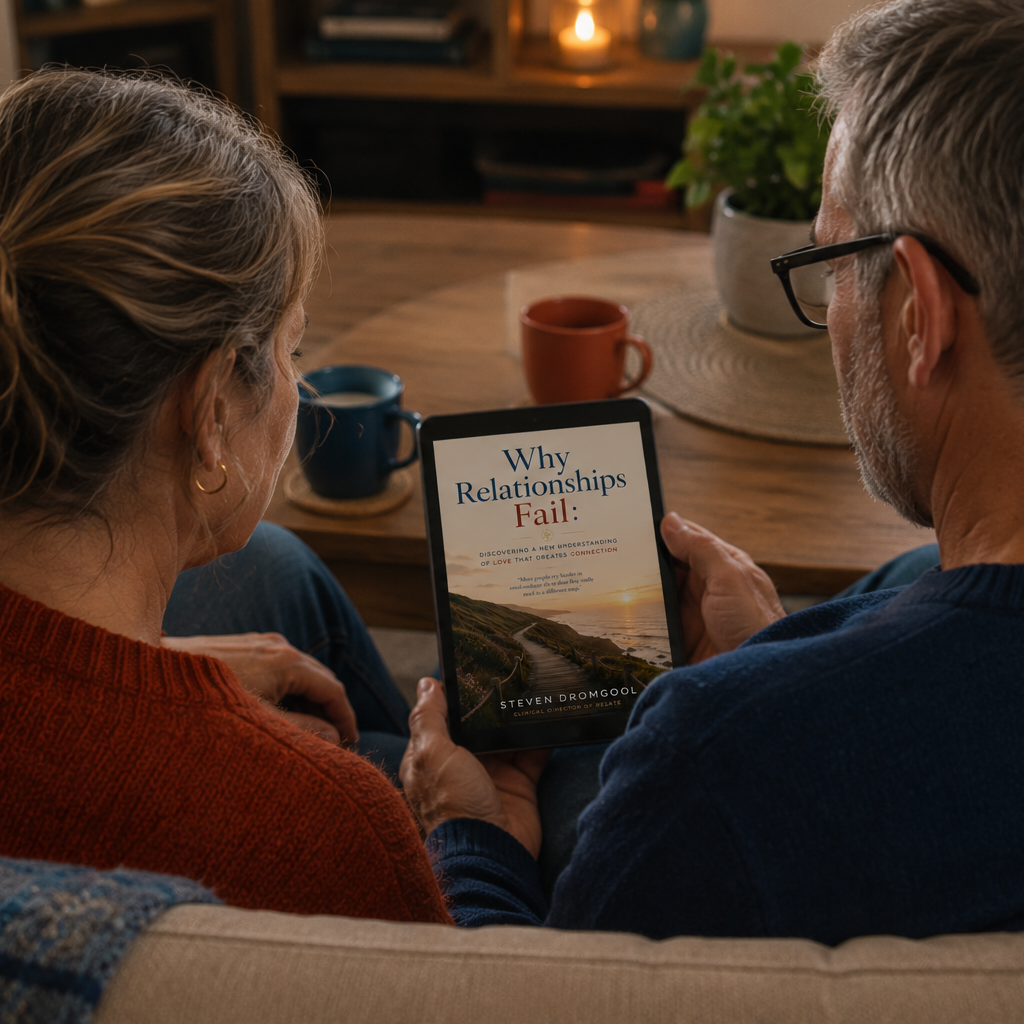
Steven Dromgool uses a phrase I particularly like: "Relationships are sticky." Think about that for a moment.
When a relationship becomes filled with frustration, disappointment and disconnection, leaving can look enormously appealing. We imagine freedom. Peace. Perhaps a new partner who understands us without requiring a detailed instruction manual. Then we find ourselves alone. Suddenly, the relationship we wanted to escape looks rather different. We remember the affection, companionship, shared humour and little rituals that made ordinary life meaningful. The arguments fade into the background. We begin to wonder whether we made a terrible mistake.
I've experienced both sides of this. I've wanted to escape the frustrations of a relationship, and I've idealised what I lost when I was alone. I've regretted both. I wish I could tell you that years of studying psychology and philosophy made me immune to these mistakes. Apparently, understanding human behaviour doesn't automatically prevent us from being human.
What I have tried to do, particularly when looking back at my mistakes, is take responsibility for the life I create. I've often been committed to doing the "right thing." The difficulty is that doing the right thing requires understanding what is right, and sometimes we simply don't know.
Relationships are sticky because they become part of who we are. We share friends, families, memories, finances, children, homes and expectations. Our identity becomes entangled with another person's life. We aren't merely deciding whether we like someone's company. We may be deciding what happens to an entire future we've spent years creating. And yet, staying has consequences too. What happens to our hopes, desires and potential when we remain in a relationship that no longer seems to fit?
Love Is Not the Same as Commitment
I wonder how many people remain in unhappy relationships because they believe love should be enough. Love matters enormously. I would hardly have spent so much of my professional life thinking about relationships if I believed otherwise. But love doesn't automatically produce the behaviours necessary to sustain a relationship.
You might love your partner deeply and still avoid difficult conversations. You might desperately want your marriage to survive while continuing to behave in ways that damage trust. You might genuinely care about someone but no longer have the energy or desire to rebuild what has been lost. Consider three questions.
Do I want this relationship? This is a question about desire. What do you value about your partner? What remains meaningful? What do you miss? What would you grieve if the relationship ended? Notice that desire isn't necessarily the same as happiness. We can want something that currently causes us considerable pain.
Am I willing to do what is necessary to improve it? This question is more demanding. It asks us to move beyond what we wish our partner would do and examine our own behaviour. Am I willing to listen differently? To acknowledge my mistakes? To become more vulnerable? To change habits that have protected me from discomfort but damaged our connection? And just as importantly, is my partner willing? One person cannot carry the responsibility for creating a mutually satisfying relationship.
Do I believe meaningful change is possible? This is a question about confidence. You may want the relationship and be willing to work on it, yet feel exhausted by years of unsuccessful attempts. Perhaps you've attended counselling before. You've read books, made promises, tried communicating differently, and somehow ended up having the same argument on another Tuesday evening. Low confidence doesn't necessarily mean change is impossible. But confidence needs something more substantial than another promise. What evidence would help you believe things could be different?
These three questions reveal something important. Desire, willingness and confidence can point in different directions. A person may desperately want to stay but be unwilling to change. Another may be willing to try but uncertain whether love remains. Someone else may still feel considerable affection but have good reasons to doubt their partner's promises. The question "Do I love them?" cannot resolve all these differences.
The Relationship You Have Both Created
Family systems theory offers a useful way to understand why changing relationships can be so difficult. Imagine a waiter carrying a tray filled with glasses. Everything is balanced, although perhaps rather precariously. Move one glass and the waiter must adjust their position to keep the tray steady. Relationships work something like this.
Over time, we develop familiar ways of responding to one another. One person withdraws when conversations become uncomfortable. The other pursues, asking questions and demanding reassurance. The more one withdraws, the more anxious the other becomes. The more anxious the pursuit, the greater the withdrawal. Eventually, both feel misunderstood. One says, "You never talk to me." The other says, "Nothing I say is ever good enough." Both may be describing something real about their experience. Neither necessarily understands the entire pattern.
Now suppose the withdrawing partner begins speaking more openly. The balance changes. The other partner must learn to respond differently too. Changing a relationship involves changing how we participate in it. This is where responsibility becomes important.
Responsibility doesn't mean accepting blame for everything that has gone wrong. Nor does it mean that two people always contribute equally to a problem. It means recognising that our behaviour matters, and that we have some influence over the person we become within a relationship.
There is an important exception. When intimidation, coercive control, threats or abuse are present, we must not treat the situation as ordinary mutual conflict. A person experiencing abuse is not responsible for creating or fixing another person's abusive behaviour. Safety takes priority over relationship repair.
In relationships where both people can participate safely and freely, however, responsibility creates possibilities. Instead of asking only, "Why won't my partner change?" we can also ask, "What would my partner experience differently if I changed?" That question can be uncomfortable. It can also be useful.
The Third Possibility: Choosing to Find Out
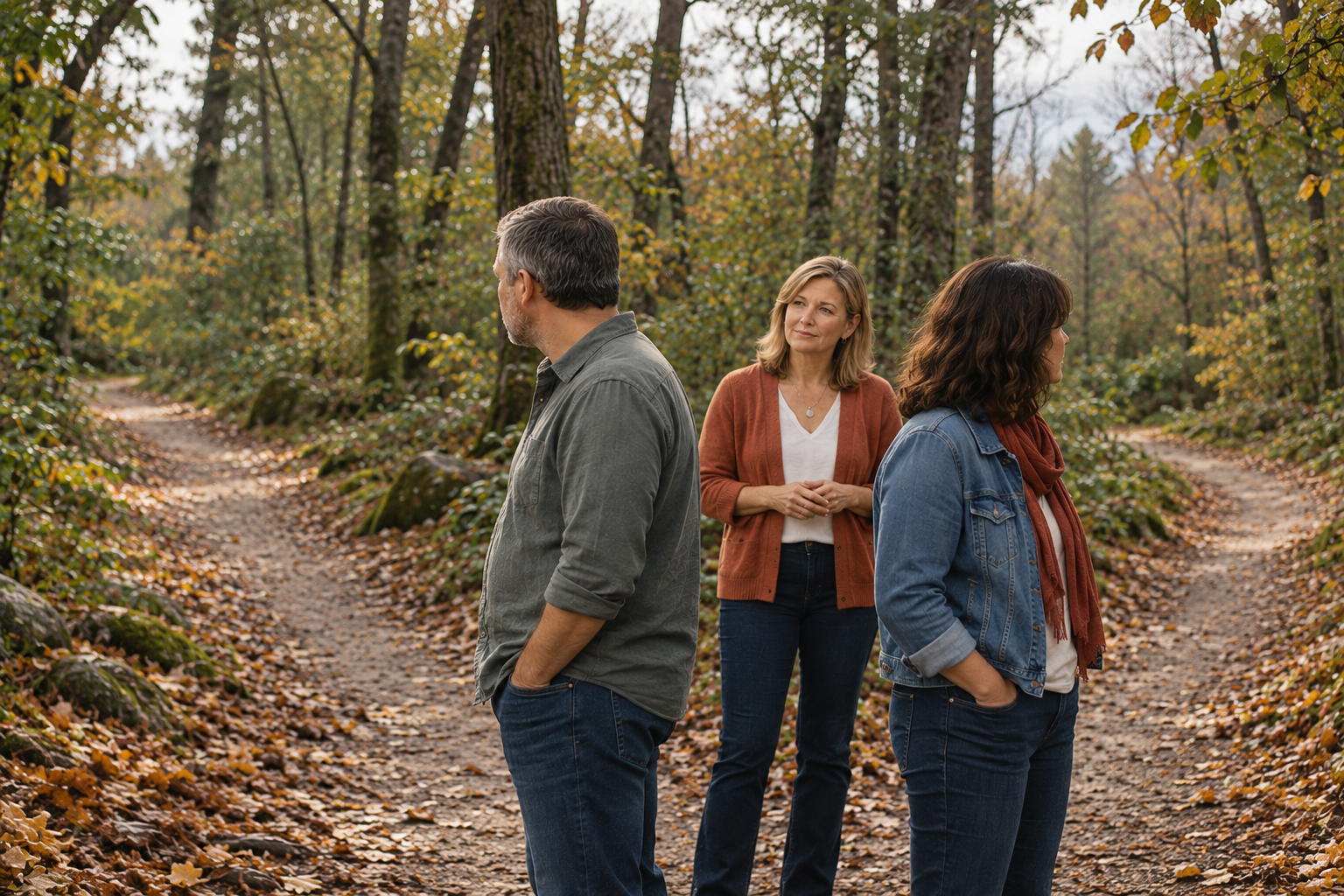
When people are uncertain about their relationship, they often imagine two choices. Stay and accept things as they are. Or leave and begin again. I wonder whether this framing creates unnecessary pressure.
There may be a third possibility: choosing to discover whether the relationship can become something different. This is not the same as deciding to stay forever. Nor is it another promise to "try harder" without knowing what that means. It is an intentional commitment to examine whether meaningful repair is possible.
For some couples, that might involve a defined period of counselling, during which both partners agree to examine their contributions to the relationship and make observable changes. What would a genuine attempt look like? Perhaps it means learning to have difficult conversations without contempt or withdrawal. Perhaps rebuilding trust requires consistent honesty, accountability and time. Perhaps one partner needs to stop making promises they don't keep, while the other needs evidence that change is occurring before risking further vulnerability.
The important word is both. If one partner has already decided to leave, the work may be different. Before beginning conventional couples therapy, it may be necessary to establish whether there is sufficient willingness to attempt repair at all. Sometimes the task is deciding whether to work on the relationship, rather than working on it immediately. And sometimes, after careful consideration, a person discovers they don't want to continue. That decision deserves the same respect as choosing to remain.
Freedom Has a Price
Existential philosophy has always interested me because it takes human freedom seriously. We have choices. Yet every choice involves giving something up.
Choose to stay, and we surrender some of the possible futures that leaving might have offered. Choose to leave, and we lose the particular future we might have created with this person. Even refusing to decide has consequences. Time continues. Our partner continues living. Children grow older. Opportunities appear and disappear. The relationship changes, whether we participate intentionally or not.
I suspect some of our indecision comes from wanting a choice without regret. We imagine that if we think long enough, examine every possibility and gather enough reassurance, we'll eventually discover a decision that carries no loss. I haven't found such a decision.
Freedom and responsibility are inseparable. We can choose our actions, but we cannot control every consequence. Nor can we guarantee how we'll feel about those choices years later. This is why I find the pursuit of absolute certainty so troublesome. What if certainty is an unreasonable condition for making a meaningful decision?
Perhaps a more useful goal is to understand ourselves, our circumstances and our responsibilities well enough to choose intentionally. That doesn't make the decision painless. Leaving someone you love can be devastating. Staying and confronting years of disappointment can be frightening. Even a good decision may involve grief. Pain doesn't necessarily tell us we've chosen badly. Sometimes it tells us that something important is at stake.
When Talking to Someone Helps
When we're caught between staying and leaving, our thinking can become repetitive. We revisit old arguments, search for evidence, imagine possible futures and ask friends for their opinions. Unfortunately, friends often have their own investments in our decisions. Some want us to preserve the relationship. Others want us to leave. None of us enters a relationship without a history - this includes our friends and family.
We bring the relationships that went well, the ones that went terribly, and the relationships that never happened at all. We remember people who made us feel loved and secure. We remember rejection, betrayal, abandonment and disappointment. Sometimes we carry wounds from experiences we would rather forget. Other times, we carry longings for experiences we've never had.
Perhaps you've spent much of your life wanting to feel genuinely chosen by someone. Perhaps you've never experienced a relationship where you felt safe enough to be completely yourself. Or perhaps you once experienced a wonderful connection and have spent years comparing every subsequent relationship with what you lost.
These experiences don't disappear when we meet someone new. They influence what we notice, what we fear, what we hope for, and what we interpret as evidence of love.
Imagine that your partner becomes quiet after an argument. If you've previously experienced abandonment, that silence might feel threatening. If you've grown up in a family where silence meant people were calming themselves, you might experience the same behaviour quite differently.
The silence is real. Your emotional response is real. But the meaning you give it may be influenced by experiences your partner knows very little about.
This makes it extraordinarily difficult to look at our relationships objectively or even with a balanced perspective. We are emotionally invested in the very thing we're trying to evaluate.
And for what it's worth, I think the subjective parts of relationships are what make them worth doing.
We don't fall in love because we've completed an objective assessment of someone's suitability. We fall in love because of how we experience another person, what they mean to us, and who we become in their presence. The feeling of being understood, the pleasure of belonging, the comfort of affection and the excitement of imagining a shared future are deeply personal experiences.
I wouldn't want to remove those things from relationships in the pursuit of objectivity.
But our subjective experience can also make it difficult to distinguish what is happening now from what happened before, or what we fear might happen in the future.
A skilled relationship informed counsellor can offer something different. Rather than telling you what to do, counselling can help you examine what each possibility means, what you're afraid of losing, what you're hoping to preserve, and what responsibility you're prepared to accept.
It can also help you become curious about your own relationship history. Which hurts are still influencing you? Which longings have you placed on your partner? What are you asking this relationship to provide? And what is actually happening between the two of you today?
The purpose isn't to dismiss your feelings or persuade you that your perceptions are wrong. Your emotions matter. They tell us something about what is meaningful to you. But understanding an emotion and understanding the situation that evokes it are not always the same thing.
Counselling can also help distinguish genuine ambivalence from emotional disengagement, temporary distress following a painful event, or circumstances where practical constraints make leaving difficult. Sometimes both partners attend. Sometimes individual counselling is more appropriate. When safety is a concern, specialised support may be necessary before any joint work.
The purpose is not to manufacture a particular outcome. It is to help you understand the decision you're facing and the person you want to be while making it.
If you're uncertain about your relationship, you don't need to work through these questions alone. I offer individual counselling for people facing relationship difficulties, conflicting feelings and important life decisions. We can explore your relationship history, what matters to you now, and the choices available to you without assuming that staying or leaving is the right answer. Book a consultation with me.
What Kind of Life Are You Choosing?
I wonder whether the most important question is always "Should I stay or go?" Perhaps there is another question underneath it. "How do I want to live, and what am I willing to take responsibility for creating?"
If you choose to remain, what kind of partner do you want to become? What needs to change? What boundaries must be respected? What evidence of mutual effort would make staying meaningful? If you choose to leave, how do you want to conduct yourself? What responsibilities remain? How might you grieve the relationship without denying the value it once held? And if you're uncertain, can you be willing to examine your choices without demanding an immediate answer?
I've made mistakes in relationships. I expect I'll make more. What matters to me is remaining willing to examine my behaviour and take responsibility for what I create. I can't promise that careful reflection will protect you from regret. But there is a difference between living with the consequences of a considered choice and living with the consequences of repeatedly avoiding one.
Relationships are sticky. Love is complicated. Freedom comes with responsibility. If you recognise yourself in this struggle, a relationship consultation may offer a place to explore your uncertainty without being pushed toward staying or leaving. You don't need to arrive knowing the answer. You do need to be willing to ask some difficult questions.
And perhaps the first is this: Am I trying to decide whether to keep the relationship I have, or am I willing to discover whether we can create a different one?
For Counsellors and Relationship Therapists
Supporting clients who are uncertain about staying or leaving requires more than good communication skills. It involves understanding relationship ambivalence, recognising when partners have different levels of commitment, assessing safety, and helping people make thoughtful decisions without imposing our own preferences.
Our 90-minute professional training, Stay or Go? Helping Clients Navigate Relationship Ambivalence, explores these clinical challenges and offers a practical framework for supporting clients through difficult relationship decisions.